
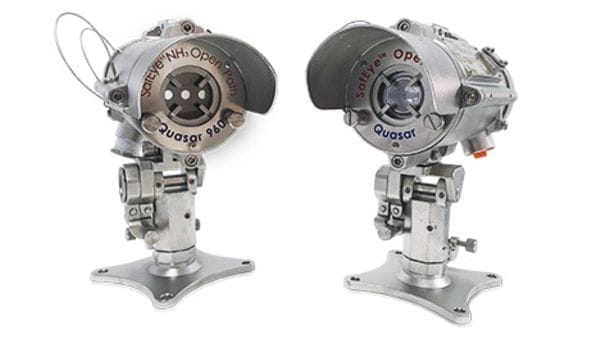
Gas detectors in Kazakhstan
A gas detector is a specialized device used to detect leaks of potentially hazardous gases at industrial facilities or construction sites. However, gas leak detectors should not be installed until all construction, building construction, painting, and other work has been completed, as these activities may affect the detector's sensitivity and durability.
Gas detector - where to install it
When considering the placement of fixed point gas detectors, several factors must be taken into account, including (but not limited to):
-
Gas type.
-
What is a potential source?
-
Air flow - natural or mechanical.
-
The shape of the site (e.g. roof peaks or depressions).
-
Obstacles that can lead to the formation of "dead zones".
-
Is it possible to control thermal connections, remote EM stop buttons and fire alarm input?
Gas detector - main types
1. Carbon dioxide detector
Carbon dioxide (CO2) has approximately the same weight and density as air, so it will naturally disperse into space. CO2 detectors are designed to monitor indoor air quality to ensure adequate ventilation, so they should be located in the main work area, but not in a location where they could be at a potential CO2 emission point. Alarm levels depend on the application: either an audible or visual indicator, or a combination of both, are possible.
2. Carbon monoxide detector
Colorless and odorless, carbon monoxide (CO) is approximately the same weight and density as air, so it disperses equally throughout space. CO is typically formed as a product of combustion and, as such, may initially increase in concentration because it is hotter than the ambient air temperature. A carbon monoxide detector is typically located near (but not directly adjacent to) a potential combustion source, such as a boiler or ventilation duct. Detectors are set to a pre-alarm at 80 ppm and a high alarm at 100 ppm.
Buy a gas detector at a low price
Power Technology offers a wide range of gas detectors to industrial and manufacturing facility owners.