
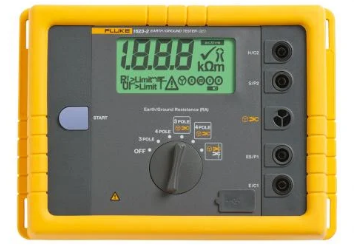
The Fluke 1623-2 Earth Ground Tester can measure ground loop resistance using clamps alone. This method involves placing two clamps near the ground rod, each connected to the meter. Ground electrodes are not used. One clamp applies a known, fixed voltage, and the second clamp measures the current. The meter then automatically determines the ground rod's resistance. This testing method is only effective if the building or structure being tested has a bonded grounding system, which is common in most cases. If there is only a single ground loop, which is common in many residential buildings, the stakeless method is ineffective, so the fall-of-voltage test method must be used.
Stakeless testing eliminates the need to disconnect the ground rod—the bonded grounding system remains intact during testing. Gone are the days of having to install and connect each ground rod in the system—a significant time saver. You can also conduct ground resistance tests in previously overlooked locations: inside buildings, on transmission towers, or in places where access to the ground is inaccessible.
Peculiarities
- 3- and 4-pole voltage drop, earth resistance loop testing
- 4-pole earth resistivity testing
- Spot testing of ground rods using 1 clamp
- Stakeless testing of ground rods using 2 clamps
- IP56 protection rating for outdoor use
- Durable carrying case
- Storing and transferring data via USB port