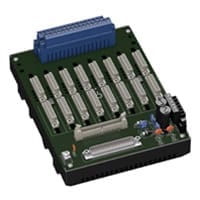
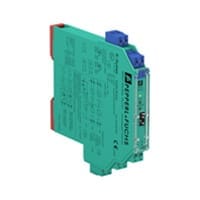
- Crate for K-system
- Replacing the E-System subrack
- Max 33 insulator slots
- Short design (installation depth 211 mm)
- Connection via distribution panels
- Partial and combined assembly is possible
- Complete electrical wiring according to customer requirements
- Allows you to preserve cable routing in the distribution cabinet
- No structural changes to the distribution cabinet are required.
Intrinsic safety barriers
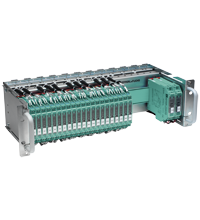
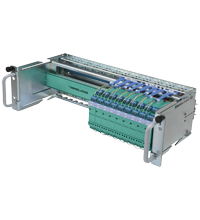
- Crate for K-system
- Replacing the E-System subrack
- Max 33 insulator slots
- Short design (installation depth 211 mm)
- Connection via terminal blocks
- Partial and combined assembly is possible
- Complete electrical wiring according to customer requirements
- Allows you to preserve cable routing in the distribution cabinet
- No structural changes to the distribution cabinet are required.
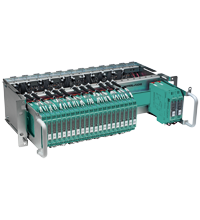
- Crate for K-system
- Replacing the E-System subrack
- Max 33 insulator slots
- Long design (installation depth 300 mm)
- Connection via distribution panels
- With a middle sheet and cable channel
- Partial and combined assembly is possible
- Complete electrical wiring according to customer requirements
- Allows you to preserve cable routing in the distribution cabinet
- No structural changes to the distribution cabinet are required.
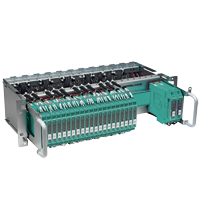
- Crate for K-system
- Replacing the E-System subrack
- Max 33 insulator slots
- Long design (installation depth 300 mm)
- Connection via distribution panels
- Partial and combined assembly is possible
- Complete electrical wiring according to customer requirements
- Allows you to keep the cable routing in the distribution cabinet
- No structural changes to the distribution cabinet are required.
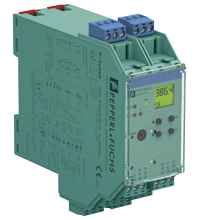
- 1-channel isolated barrier
- 24VDC power supply (power bus)
- Load cell input (full or half bridge)
- Output 0 mA ... ± 20 mA or 0 V ... ± 10 V
- 2 relay contact outputs
- Programmable high/low alarm
- Configurable using PACTware or keyboard
- RS-485 interface
- Low response time
- Line Fault Detection (LFD)
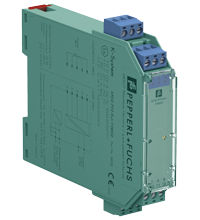
- 1-channel
- 24VDC power supply (power bus)
- Potentiometer input
- Output voltage 0 V ... 10 V
- Accuracy 0.05%
- Up to SIL 2 in accordance with IEC/EN 61508
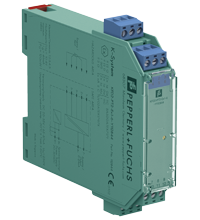
- 1-channel
- 24VDC power supply (power bus)
- Potentiometer input
- Current output 0 mA ... 24 mA
- Accuracy 0.05%
- Up to SIL 2 in accordance with IEC/EN 61508
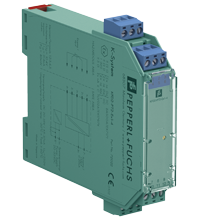
- 1-channel isolated barrier
- 24VDC power supply (power bus)
- Potentiometer input
- Current output 0 mA ... 20 mA
- Lead resistance compensation adjustment
- Accuracy 0.05%
- Up to SIL 2 in accordance with IEC/EN 61508
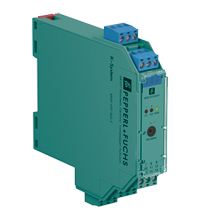
- 2-channel isolated barrier
- 24VDC power supply (power bus)
- Thermocouple, RTD, potentiometer, or voltage input
- Can be used as a signal splitter (1 input and 2 outputs)
- Voltage output 0/1 V ... 5 V
- PACTware is configured
- Line Fault (LFD) and Sensor Burnout Detection
- Up to SIL 2 in accordance with IEC/EN 61508 / IEC/EN 61511
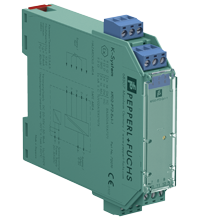
- 1-channel isolated barrier
- 24VDC power supply (power bus)
- Potentiometer input
- Output voltage 0 V ... 5 V
- Lead resistance compensation adjustment
- Accuracy 0.05%
- Up to SIL 2 in accordance with IEC/EN 61508
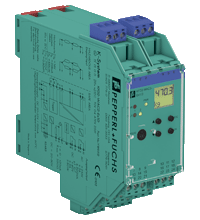
- 1-channel isolated barrier
- 24VDC power supply (power bus)
- Load cell input (full or half bridge)
- Output 0 mA ... ± 20 mA or 0 V ... ± 10 V
- 2 relay contact outputs
- Programmable high/low alarm
- Configurable using PACTware or keyboard
- RS-485 interface
- Line Fault Detection (LFD)
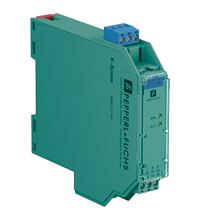
- 1-channel isolated barrier
- 24VDC power supply (loop powered)
- Current or voltage input
- Output: 4 ... 20 mA
- Ranges selectable by potentiometer or DIP switch
- Line Fault Detection (LFD)
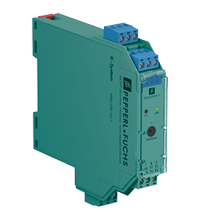
- 1-channel isolated barrier
- 24VDC power supply (power bus)
- Thermocouple, RTD, potentiometer, or voltage input
- Voltage output 0/1 V ... 5 V
- PACTware is configured
- Line Fault (LFD) and Sensor Burnout Detection
- Up to SIL 2 in accordance with IEC/EN 61508 / IEC/EN 61511
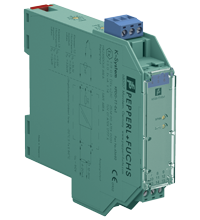
- 1-channel isolated barrier
- 24VDC power supply (loop powered)
- Thermocouple input
- Output 4 mA ... 20 mA
- Internal cold junction compensation
- Detecting a sensor failure
- Selectable DIP switch ranges
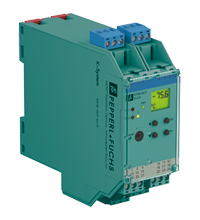
- 1-channel isolated barrier
- Universal use with various power sources
- Thermocouple, RTD, potentiometer, or voltage input
- Backup input TP
- Current output 0/4 mA ... 20 mA
- 2 relay contact outputs
- Configurable using PACTware or keyboard
- Line Fault (LFD) and Sensor Burnout Detection
- Up to SIL 2 in accordance with IEC/EN 61508 / IEC/EN 61511
Spark protection barrier
An intrinsically safe barrier is an electrical device designed to limit the energy transmitted through it to a safe level. It prevents sparks or other ignition sources that could cause an explosion in a hazardous area. It consists of a series of components, such as resistors, diodes, and fuses, that monitor and reduce voltage and current to safe levels. Through distribution agreements with American and European equipment manufacturers, we offer competitive prices and short delivery times. Intrinsically safe barriers are also in stock at our warehouse in Atyrau.
Operating principle
- Voltage and current limiting. The product reduces voltage and current to levels safe for explosive environments.
- Circuit separation. Creates a physical separation between hazardous and safe areas, preventing the movement of hazardous energy.
- Surge protection. In the event of a short circuit or other failure, the device prevents the transfer of high energy levels that could cause a spark.
You can purchase an explosion-proof barrier from us. Find out more in this section of the website.
Application of devices in industry
- Oil and gas. Used to protect sensors, valves, and other devices operating in areas with high concentrations of explosive gases.
- Chemical. They ensure the safety of equipment in environments where hazardous chemical spills are possible.
- Mining. In mines and quarries, an intrinsic safety barrier protects electrical systems from methane and coal dust explosions.
Benefits of using
- Increased safety. Reduced risk of explosions and fires in hazardous areas.
- Compliance with international safety standards such as ATEX, IECEx.
- Equipment reliability. Protection against damage due to overloads and short circuits.
Correct application and installation can significantly reduce the risks associated with working in such conditions, ensuring the reliability and safety of equipment and personnel.
You can purchase an explosion protection barrier or get a consultation by sending a request or calling us.
Our qualified managers will answer all your questions, provide product information, help you select the right product, and place your order.