Vibration sensors
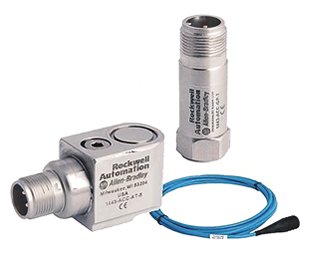
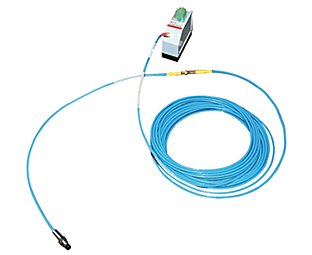
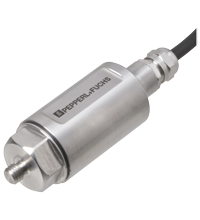
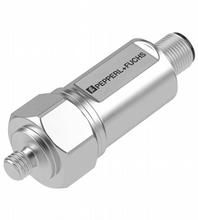
Vibration sensors
Despite advances in vibration monitoring and analysis equipment, the selection of vibration sensors and their installation on the machine remain critical factors determining the success of any monitoring program. Low-quality sensors can yield highly unreliable data or, in some cases, lead to critical machine conditions not being properly assessed.
Vibration sensor - characteristics
The three parameters reflecting motion detected by vibration monitors are displacement, velocity, and acceleration. These parameters can be measured by various motion sensors and are mathematically related (displacement is the first derivative of velocity, and velocity is the first derivative of acceleration). The choice of a sensor proportional to displacement, velocity, or acceleration depends on the frequencies and signal strength of interest.
Eddy current vibration sensor
Eddy current sensors are non-contact measuring instruments used primarily to measure shaft vibration, shaft/rotor position, and clearance. Also known as displacement sensors, eddy current sensors are typically used in machines using plain bearings. They have excellent frequency response without low-frequency limitation and can also be used to provide a trigger input for phase measurements.
Speed vibration sensor
Speed sensors are used for low- and medium-frequency measurements. They are useful for vibration monitoring and balancing rotating mechanisms. Compared to accelerometers, speed sensors are less sensitive to high-frequency vibrations. The mechanical design of a speed sensor—an iron core moving inside a coil in a confined magnetic field—does not clip the generated signal but ensures smooth saturation.
Accelerometers
Piezoelectric accelerometers, which produce a constant signal over a wide frequency range, up to 20 kHz, for a given level of mechanical acceleration, are very useful for all types of vibration measurements. Acceleration integrated with velocity can be used for low-frequency measurements. High-frequency acceleration signals, supplemented by various signal processing methods, are very useful for bearing and gear vibration measurements.