Our 1492 series terminal blocks with isolation switches provide positive electrical circuit isolation. They are available in open styles and high-density configurations.
Terminal Blocks - Rockwell Automation
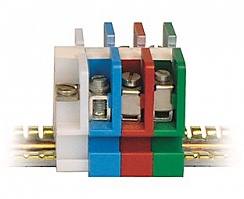
Our Bulletin 1492 open-style terminal blocks (Types C and F) provide visual confirmation of wire placement within the clamping area. A standard screwdriver can be used to solder the blocks. Styles C and F blocks attach more securely to Allen-Bradley® rails; some also mount to DIN rails. Some Type C blocks accept snap-in markers for identifying long wires.
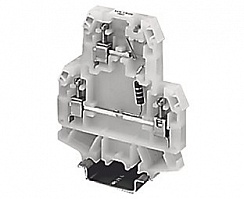
Our NEMA 1492 voltage-indicating terminal blocks provide visual indication of voltage at the top and bottom terminals.
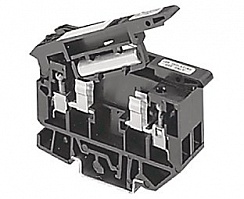
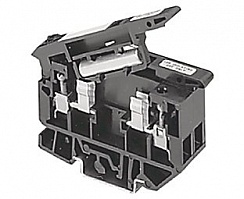
Our 1492 series fuse terminal blocks provide a simple way to add overcurrent protection to your circuit. A status indicator illuminates when a fuse has blown, helping speed troubleshooting. The GMT fuse block features a visual indicator flag that also acts as an output contact to provide an electrical signal when a fuse blows.
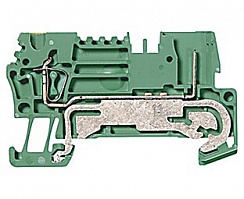
Our flexible IEC 1492 series spring-clamp push-in terminal blocks feature a standard clamp connection on one end and a comb connection on the other. These blocks are an excellent choice for quickly connecting multiple connections, including component plugs, fuse plugs, and disconnect plugs.
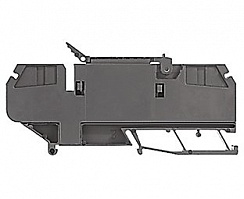
Our Bulletin 1492 IEC spring-clamp terminal blocks with fuses provide overcurrent protection and mount directly to a DIN rail. These articulated-lever blocks are available with or without a blown fuse indicator.
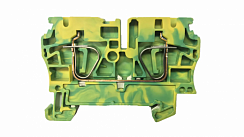
Our IEC 1492 spring-clamp grounding terminal blocks allow for easy and neat DIN rail grounding connections. Single-level blocks are available with double, triple, or quadruple connections. Double-level blocks include one feed-through connection and one ground connection.
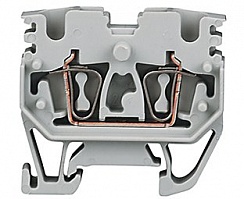
Our IEC 1492-compliant mini-interlocking blocks with spring clamps are UL-listed for 600V. They are available in single- and four-circuit, two-circuit, feed-through, and grounding versions. They offer durability and a wide range of colors, all while maintaining a compact footprint. Our interlocking mini-blocks are an excellent solution for high-density applications and can be mounted on rails or panels.
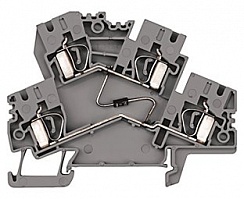
Our Bulletin 1492 terminal blocks with internal components feature fixed electronic components. They are available with a forward-facing diode, a reverse-facing diode, a surge suppressor, and a range of resistor values.
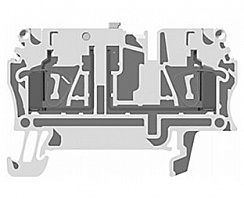
Our IEC 1492 standard spring clamp terminals provide an easier and more convenient way to disconnect a circuit without rewiring.
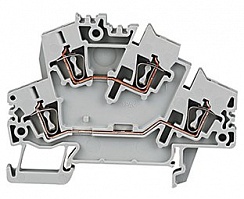
Our IEC 1492 series multi-circuit feed-through terminal blocks with spring clamps are ideal for applications where control signals must be distributed and collected through the same blocks. These blocks are an excellent solution for high-density wiring and are available in nine colors.
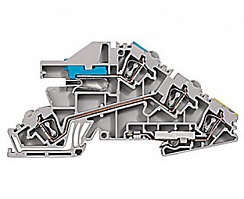
Our spring-clamp terminal blocks with neutral disconnection according to IEC 1492 provide increased safety, as no tool is required to open or close the circuit. These blocks accommodate a series of feed-through circuits, earth circuits, and circuits directly connected to a busbar. This busbar runs the entire length of the terminal blocks to a junction block, which is mounted further down the rail for isolated neutral connection.
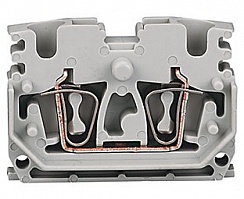
Our Bulletin 1492 mini panel-mount IEC spring-clamp terminal blocks are standard, single-circuit, feed-through blocks that are durable and available in a wide range of colors. They are an excellent choice for high-density applications where space is limited.
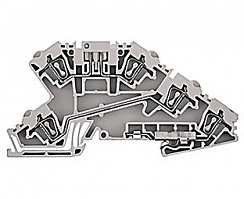
Our IEC 1492 series push-in spring-clamp terminal blocks for analog control circuits allow you to connect discrete electronic components, fuses for circuit protection, or disconnect plugs for circuit isolation in tight spaces. This line includes a terminal block with two feed-through circuits and one ground connection.
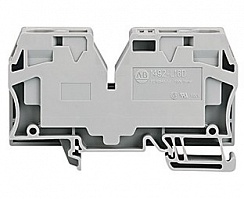
Our IEC Bulletin 1492 spring-clamp terminal blocks for power distribution and feeder spacing are available in a variety of connector configurations to meet your application needs. Hinged covers provide easier access and better protection against accidental contact.