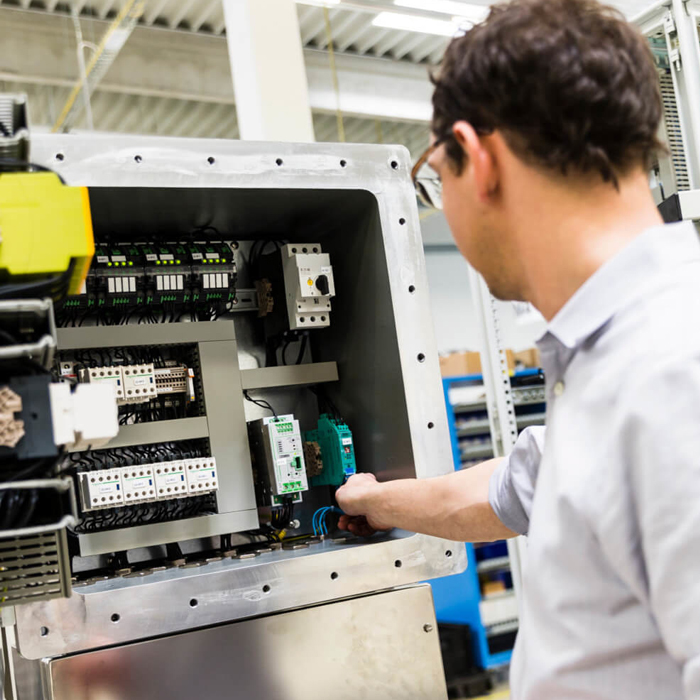
An explosive mixture can form when air comes into contact with flammable liquids, vapors, or dust. When such a mixture reaches a certain concentration, it can cause ignition or even an explosion. Therefore, electrical equipment used in such conditions must be adequately protected to prevent accidents and ensure safety.
Explosion protection is understood as a system of technological and organizational measures aimed at preventing explosions and uncontrolled combustion of substances in production.
In areas with increased hazardous conditions, special explosion-proof electrical equipment is installed, which helps reduce the risk of damage to production and human life.
Characteristics of explosion-proof electrical equipment
Explosion-proof electrical equipment must meet certain characteristics:
-
Explosion prevention . Equipment must be capable of preventing an explosion caused by an explosive atmosphere.
-
Reducing the risk of fire . Electrical equipment must significantly reduce the risk of spontaneous combustion.
-
Applicability . Explosion-proof equipment must be suitable for its intended application, taking into account the specifics of the production processes.
-
Design and special devices . Explosion-proof equipment has a design and special devices that prevent or minimize the risk of ignition of an explosive atmosphere.
Types of explosion-proof electrical equipment
Explosion-proof electrical equipment can be classified depending on its use:
-
Group I. Devices used in conditions where firedamp and dust are formed, for example, in mines or adjacent buildings.
-
Group II . Devices intended for use in other gas environments, excluding mines and the buildings serving them.
-
Group III . Devices used in high concentrations of dust of a nature other than mine dust.
The second group (II) is further subdivided into subgroups A, B, and C, which are determined by the surface temperature and composition of the explosive mixture. Devices in the second group also have different temperature classes.
Degrees of protection against explosion and fire
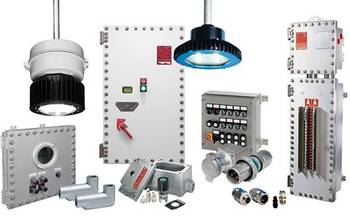
Explosion-proof electrical equipment can have different degrees of protection:
-
Highly secure . Equipment that can avoid an emergency even in the event of a failure, eliminating the risk of explosion and ensuring safety through redundancy of critical systems.
-
Safe . Equipment that remains functional even with minor damage.
-
Increased reliability . Operation is only possible if the device is in good working order.
Marking of explosion-proof electrical equipment
The primary objective in developing explosion-proof systems is to maximize the isolation of components that could cause an explosion or fire upon contact with a hazardous environment. This is achieved by providing an external enclosure and openings for connecting external devices.
Explosion-proof equipment is marked with special markings that contain the following information:
· Designation of the degree of explosion protection of electrical devices (2, 1, 0).
· Marking whether the equipment is explosion-proof (Ex).
· Designation of the degree of explosion protection (d, p, i, q, o, s, e).
· Designation of a group or subgroup of electrical equipment (I, II, IIA, IIB, IIC).
Indication of the temperature class of the device (T1, T2, T3, T4, T5, T6).
Application of explosion-proof electrical equipment
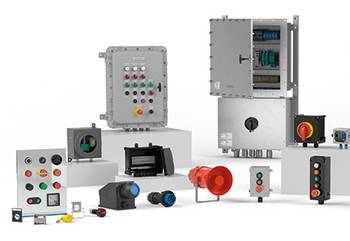 Explosion-proof electrical equipment is used in various industries and fields:
· Flour mills;
· Mines;
· Factories for the production of varnishes and paints;
· Fuel, chemical and metallurgical production.
Buy explosion- proof electrical equipment in Kazakhstan
If you need explosion-proof electrical equipment , you can contact Power Technology Solutions. They offer a wide range of high-quality equipment that meets safety requirements and explosion protection standards.